When to see the great migration: a month-by-month guide
The herds never stand still. Here's where they usually are each month, and how we plan a safari around them.
By The BAHE team · 6 November 2026 · 2 min read
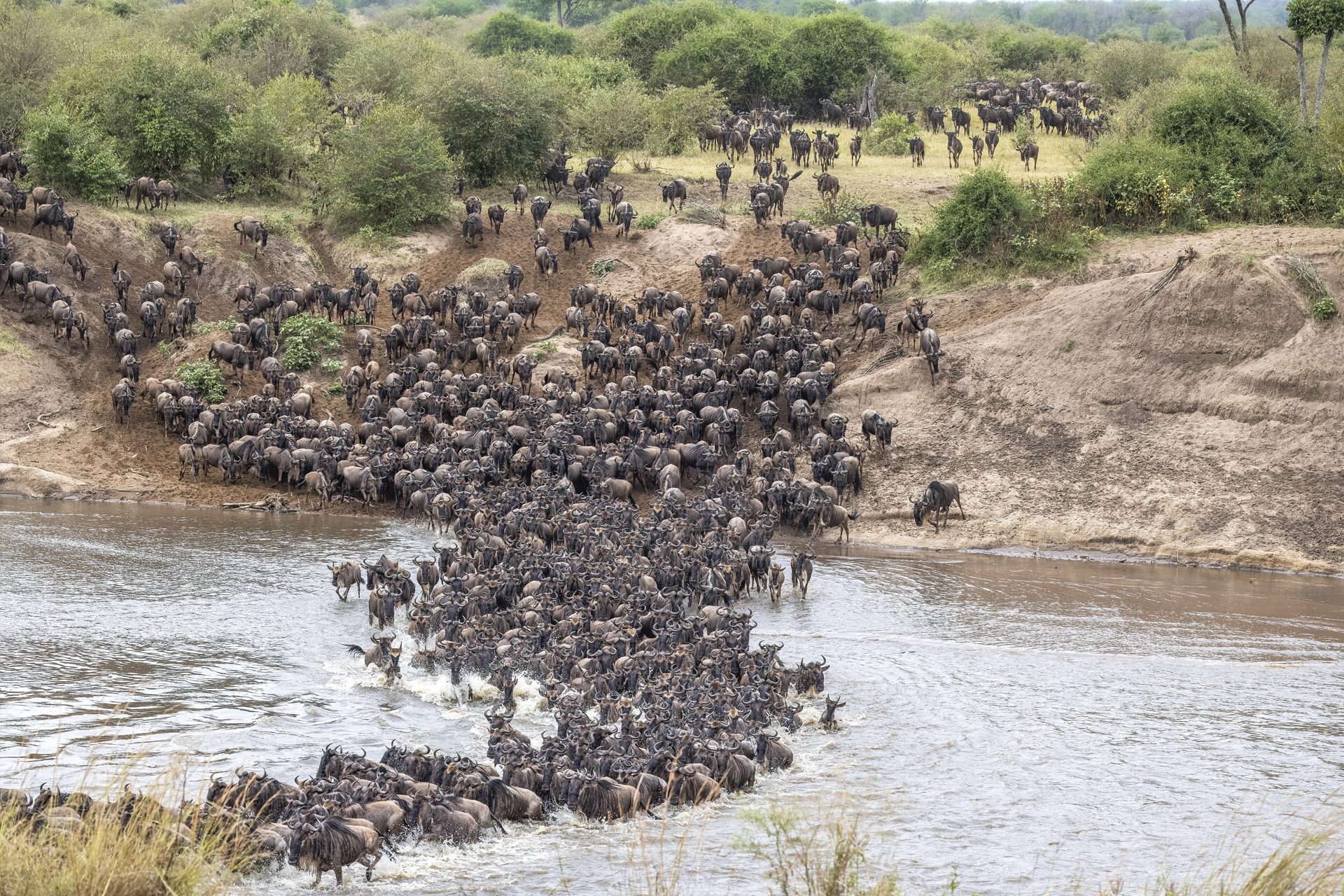
Every year, around one and a half million wildebeest, with zebra and gazelle alongside them, travel a huge loop through the Serengeti and into Kenya’s Maasai Mara. They follow rain and fresh grass, so no two years are exactly alike. Still, the broad pattern holds.
December to March: calving in the south
The herds settle on the short-grass plains around Ndutu and the southern Serengeti. In February most calves are born within a few weeks. With so many young animals around, lion, cheetah and hyena are busy, and sightings can be extraordinary.
April and May: the long rains
Rain falls heavily for much of these months. The herds start drifting north and west. Some camps close, but those that stay open are quiet and good value.
June and July: the Western Corridor
The herds gather around the Grumeti River. Crossings here are smaller than on the Mara but just as dramatic, with large crocodiles waiting.
July to October: the Mara River
This is when the famous river crossings happen in the northern Serengeti around Kogatende. Herds cross back and forth many times, and patience is rewarded.
November: heading south again
The short rains arrive and the herds stream south through the eastern Serengeti and Loliondo.
How we plan around it
We keep in touch with guides and camps in the park, and we choose where you stay based on the most recent movements, not last year’s map. If seeing a crossing is your top priority, we’ll suggest at least three nights in the north so you have time to wait for it.